
Description
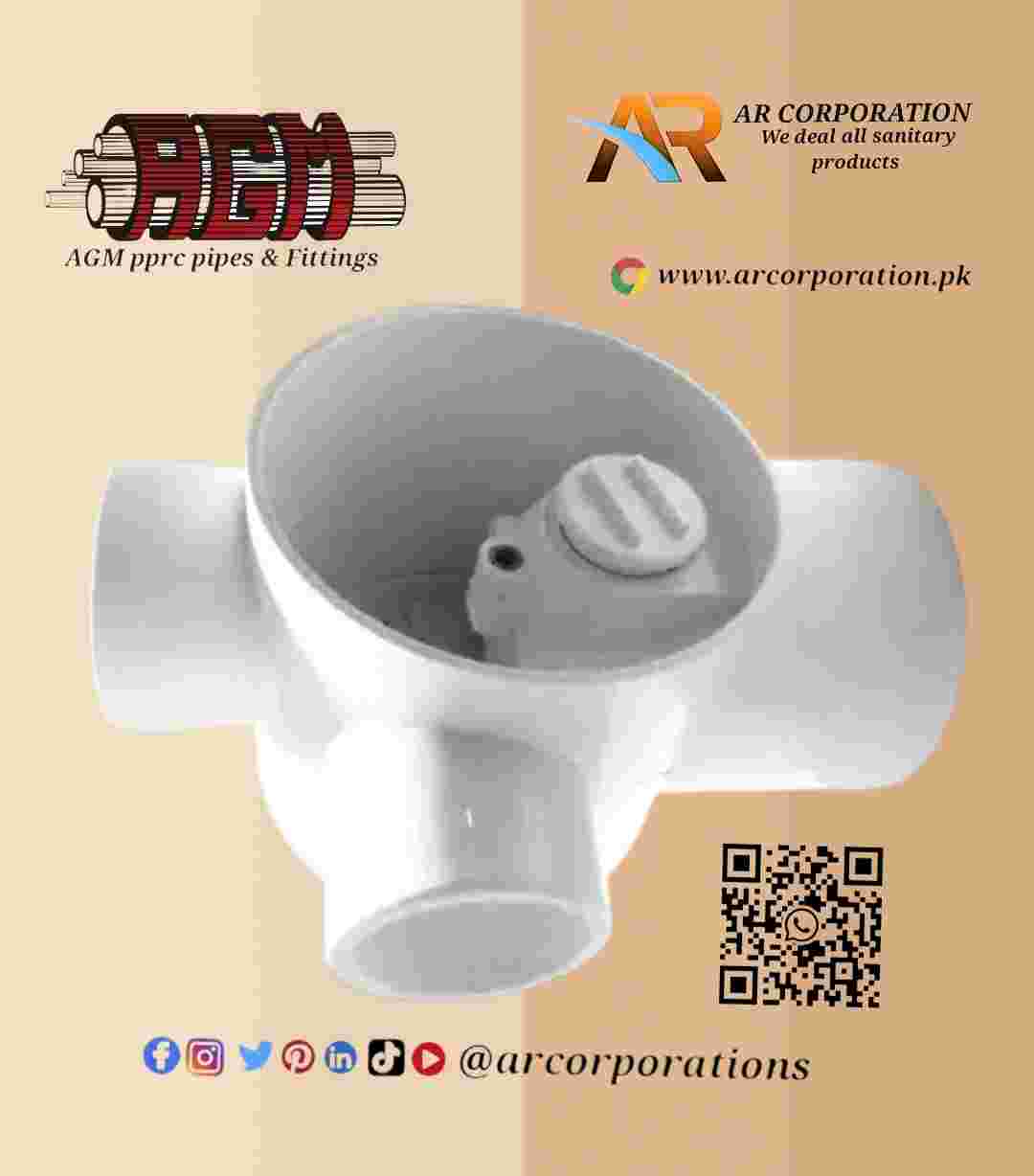
UPVC floor trap
AGM imported from Saudi Arab ASTM uPvc Sch-40 Pressure Fittings, Drain sewer ventilation. Suppliers in Pakistan contact 0322-3540656
What is AGM upvc Floor Trap 3″ ?
description
An AGM uPVC floor trap (3″ SCH-40) is a floor-level plumbing fitting that collects and discharges standing water into the soil/waste drainage system while providing a water seal to block sewer gases. It’s a molded uPVC trap sized for nominal 3-inch outlet and normally supplied with a removable strainer/grating and a solvent-weld (slip) socket connection to SCH-40 uPVC pipe. AGM lists 3″ P-traps / floor traps in their UPVC fittings line.
Material & standards AGM upvc Floor Trap 3″
-
Material: un plasticized PVC (uPVC / PVC-U). AGM’s UPVC fittings catalog shows these fittings produced from uPVC.
-
Standards: typically manufactured to common industry standards for SCH-40 uPVC fittings (ASTM D2466 / ASTM D2665 / ASTM D1785 for related pipe/fitting dimensions) or regional equivalents used by AGM. Always confirm the specific AGM part datasheet for exact standards/certificates.
Typical performance limits
-
Maximum recommended operating temperature: ~60 °C (140 °F) for standard uPVC — do not use for hot water applications above the rated temperature.
-
Pressure / use case: floor traps are normally used on drainage (non-pressure / low-pressure) soil & waste systems. If used on pressurized lines (rare for floor traps), check the manufacturer’s pressure rating — most floor traps are intended for gravity drainage.
Typical dimensions / connection
-
Nominal size: 3″ indicates compatibility with Schedule-40 3″ uPVC pipe OD and socket dimensions.
-
End type: commonly slip (socket) × slip (socket) for solvent welding into SCH-40 pipe (confirm with the AGM product line/part number).
Installation — step-by-step (typical procedure)
-
Confirm part & compatibility: verify AGM part number for the 3″ floor trap and that the connecting pipes are SCH-40 uPVC. (Ask supplier for the AGM datasheet if uncertain.)
-
Positioning & slope: set the trap at the correct finished-floor level so the removable grate sits flush or slightly below the finished surface. Provide correct slope (typical 1:50 to 1:100) to the trap for good drainage.
-
Cut & prepare pipes: cut pipe square, deburr, and dry-fit to check alignment. Chamfer spigot ends slightly for easier insertion.
-
Clean & solvent-weld: follow the solvent cement manufacturer and AGM recommendations — apply primer if required and then solvent cement to the spigot and socket. Insert fully and rotate (about 1/4 turn) to evenly distribute the cement. Hold for the joint set time. Use the solvent cement and primer types rated for SCH-40 uPVC. Guidance on setting & cure times: initial set and handling times depend on pipe size and temperature (for 1½″–3″ typical initial set times are in the 15–30 minute range at moderate temps; full cure longer — see cement manufacturer table).
-
Cure time before testing: allow the recommended cure time (initial handling time and final cure per cement/temperature table) before pressure testing or applying load.
-
Testing: perform hydrostatic/leak test for the drainage system if required by local code — do not use compressed air for pressure testing of solvent-welded plastic systems unless the code allows it.
-
Final works: install finishing around grate (tiles/concrete) ensuring the grate remains removable for cleaning and access.
Typical uses & limitations
-
Uses: building bathroom/kitchen wet areas, laundry drains, floor areas in commercial kitchens, shower rooms, toilet rooms — any location needing a floor drainage point. Suitable for gravity sewer/drain lines and cold (non-pressurized) drainage systems.
-
Not recommended for: hot-water drainage above the uPVC temperature rating or aggressive chemical wastes that attack PVC (check chemical compatibility). For hot water or higher chemical resistance use CPVC / other engineered plastics or metal traps as specified.
Maintenance & inspection
-
Keep removable strainer/grate clear of debris.
-
Inspect water seal periodically — ensure trap does not dry out in rooms not used often (pour water occasionally or install trap primer).
-
Replace cracked/brittle traps — uPVC can be brittle if exposed to prolonged sunlight or solvents.

Reviews
There are no reviews yet.