
Description
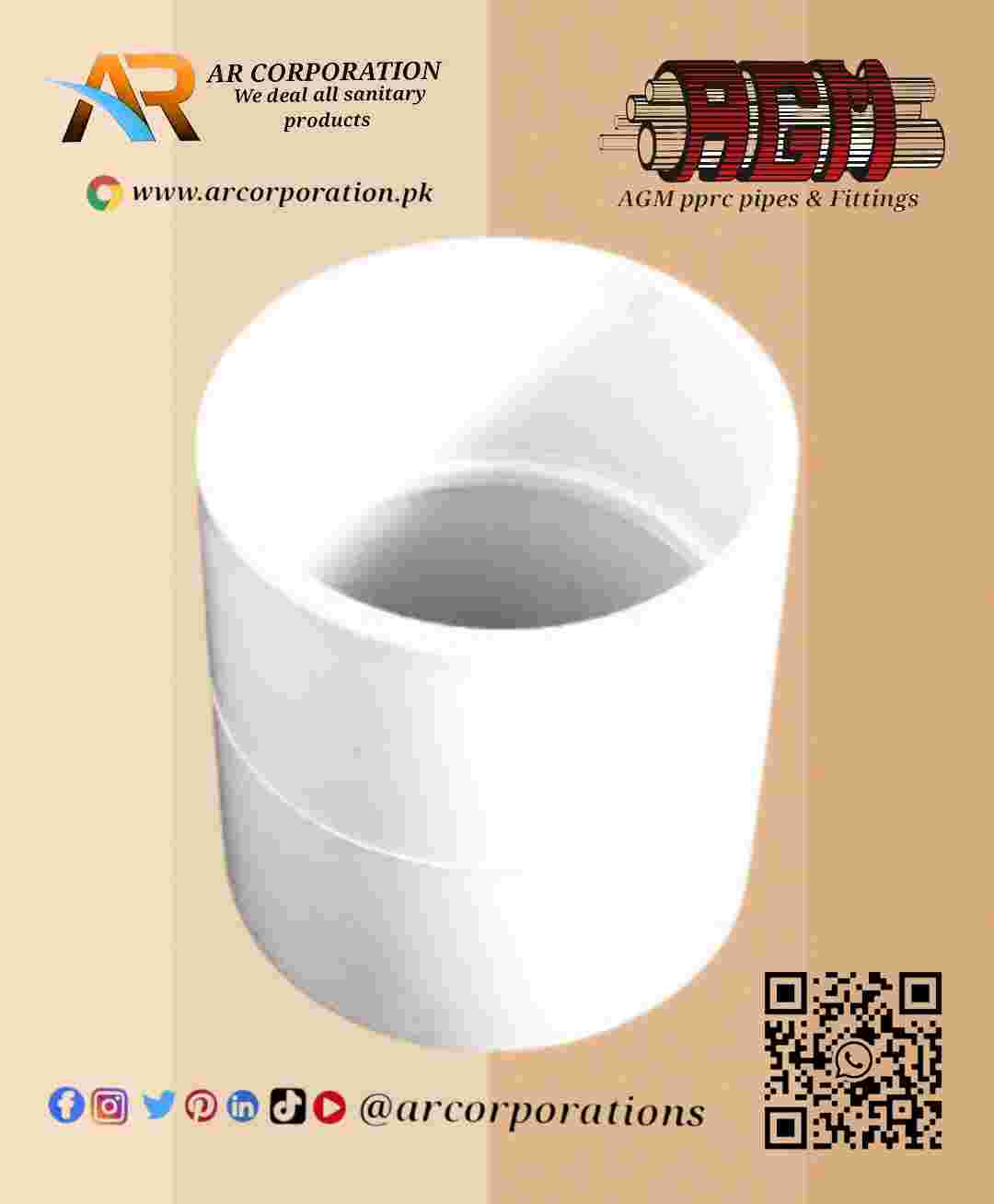
upvc socket 2″
AGM imported from Saudi Arab ASTM uPvc Sch-40 Pressure Fittings, Drain sewer ventilation. distributor in Islamabad Pakistan 0322-3540656
What is AGM upvc Socket 2″ ?
A UPVC Socket 2″ Sch 40 from AGM (Arabian Gulf Manufacturers) is a pipe fitting made of Un plasticized Polyvinyl Chloride (UPVC) designed to connect two 2-inch UPVC pipes in a straight line by socket-type joints (i.e., pipes insert into sockets on both ends). It’s part of the Schedule 40 series — a standard wall thickness used in plumbing systems for water supply, sewerage, drainage, and other piping applications.
UPVC fittings from AGM are typically imported from Saudi Arabia, conform to ASTM standards, and are used in both water distribution networks and sewage/drainage lines because of their durability and resistance to corrosion.
🧱 Material and Standards
Material:
-
UPVC (Un plasticized Polyvinyl Chloride) — a rigid, non-plasticized PVC that is chemically stable, corrosion-resistant, and suitable for potable water and wastewater systems.
Standards:
-
Manufactured according to ASTM D2466 & ASTM D2665 for Schedule 40 pressure and DWV fittings.
-
The UPVC material grade often conforms to quality standards for plumbing (ASTM D1784), ensuring strength, impact resistance, and long service life.
Color:
-
Typically white for potable water and sewer applications.
Schedule:
-
Schedule 40 — standard wall thickness that balances strength with lightweight design.
📏 Typical Specifications
| Feature | Specification |
|---|---|
| Nominal Size | 2″ (Nominal Pipe Size) |
| Material | UPVC (Un plasticized PVC) |
| Schedule | Schedule 40 |
| Color | White |
| Connection Type | Socket (solvent-weld) |
| Applicable Standards | ASTM D2466 & ASTM D2665 |
| Usage | Water supply, sewer, drainage, plumbing |
| Operating Conditions | Cold water, waste flows; temperature up to ~60 °C |
| Pressure Handling | Typical for Schedule 40 potable water/pressure systems (varies with local requirements) |
📄 Description & Key Features
🧠 General Description
An AGM UPVC socket is a straight fitting that allows the union of two UPVC pipes end-to-end. Both ends are socket style, meaning the pipe ends are inserted into the fitting and joined using solvent cement or adhesive designed for UPVC.
UPVC is chosen because it resists chemical corrosion (unlike metals), doesn’t rust, and is lightweight yet strong — making it ideal for cold water distribution, wastewater and sewerage applications, and general plumbing systems.
⭐ Key Features
Chemical and Corrosion Resistance — suitable for a wide range of fluids including potable water and wastewater.
Lightweight & Easy to Install — easier handling and labor cost savings vs. metal.
Smooth Internal Surface — reduces friction and buildup inside the pipe.
Solvent-Weld Joint — strong joint when installed with correct cement and primer.
Suitable for Multiple Systems — potable water, sewerage, irrigation, HVAC drainage, etc.
🧰 Installation Guide
Tools Needed
-
UPVC solvent cement (and primer if recommended)
-
Pipe cutter or fine-toothed saw
-
Measuring tape
-
Marker
-
Sandpaper / deburring tool
Step-by-Step Installation
-
Prepare Pipes
-
Cut the UPVC pipes squarely with a pipe cutter or saw.
-
Deburr the ends and remove rough edges for a clean fit.
-
-
Dry Fit
-
Insert each pipe end into the socket fitting without solvent to check that alignment and depth are correct.
-
-
Apply Solvent Cement
-
Apply primer (if required by local code) to both pipe ends and socket interiors.
-
Brush a uniform layer of UPVC solvent cement on the outside of each pipe end and the inside of each socket.
-
Work quickly — solvent cement sets rapidly.
-
-
Join Pipes
-
Insert the pipe ends into the fitting sockets, twisting slightly to distribute the cement evenly.
-
Hold in place for a few seconds to allow the joint to set.
-
-
Cure Time
-
Allow adequate cure time (per solvent cement manufacturer and local standards) before hydrostatic/pressure testing or operating with fluid.
-
Important: Always follow local plumbing codes and standards — solvent types and cure times can vary by climate and application.
🚰 Usage & Typical Applications
Sewerage and Waste Systems
-
Connect straight runs of sewer or DWV (Drain-Waste-Vent) pipes.
-
Works with gravity-flow drainage for buildings or external sewer lines.
Water Supply Lines
-
Suitable for cold potable water lines in residential, commercial, and industrial systems.
-
Requires correct pressure-rated system design as per local plumbing codes.
Drainage and HVAC
-
Used in HVAC condensate drains, storm water systems, or drainage lines.
Irrigation and Industrial Systems
-
Can be used in irrigation pipelines or industrial fluid transport where chemical resistance is needed.

Reviews
There are no reviews yet.