
Description
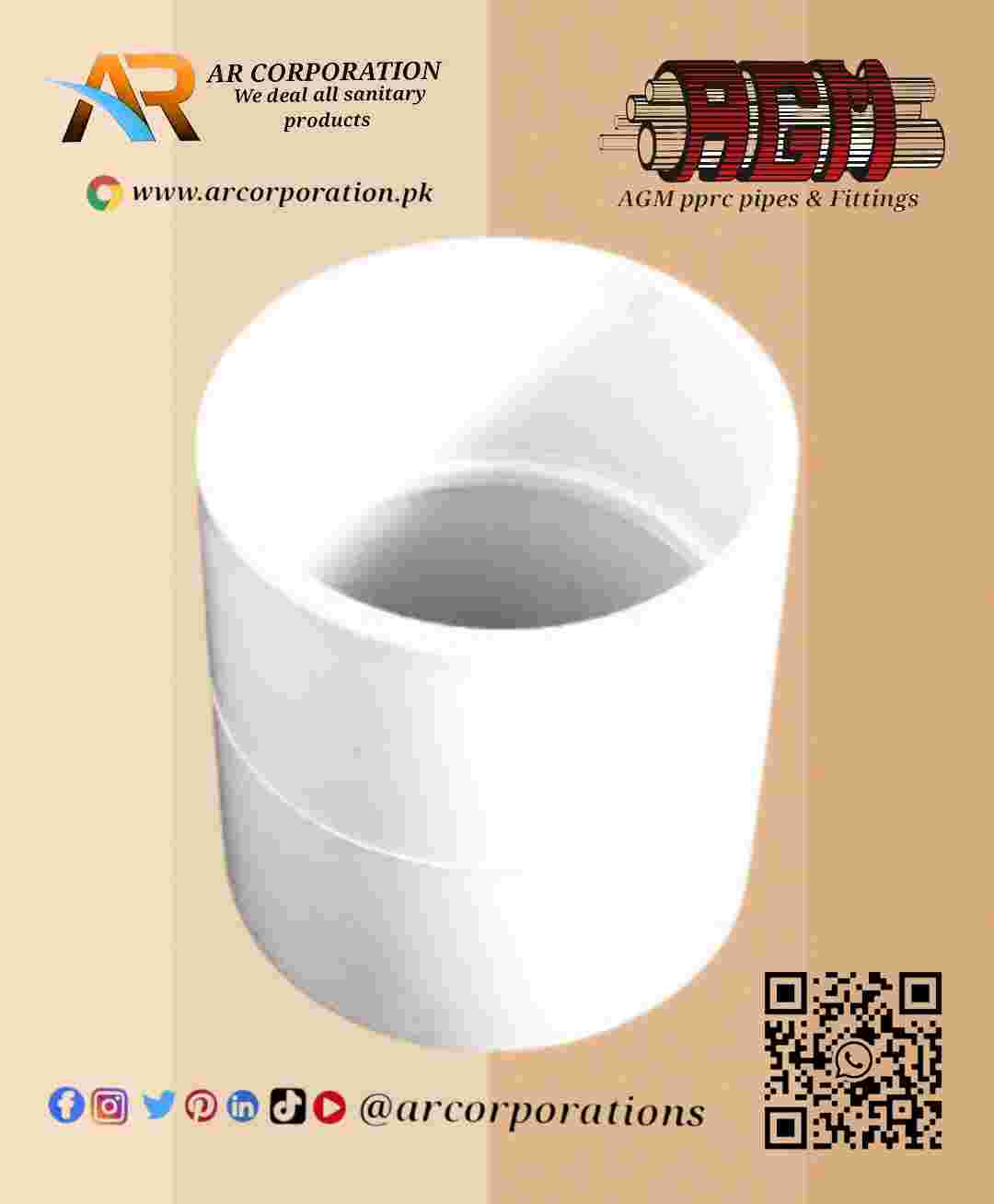
upvc socket 1-1/4″
AGM imported from Saudi Arab ASTM uPvc Sch-40 Pressure Fittings, Drain sewer ventilation. online shop in Pakistan contact 0322-3540656
What is AGM upvc Socket 1-1/4″ ?
Description
AGM UPVC (Un plasticized Polyvinyl Chloride) Socket fittings are rigid, non-toxic plastic pipe components designed for reliable plumbing systems. The “Socket” refers to a female-threaded or solvent-welded joint type that allows pipes to be connected securely. This specific model is a 1-1/4 inch (nominal diameter) Schedule 40 (SCH 40) fitting, indicating a standard wall thickness for moderate pressure applications. It’s commonly used in sewerage (wastewater drainage) and potable water supply systems due to UPVC’s resistance to corrosion, chemicals, and scaling. The product is imported from Saudi Arabia, where manufacturers like AGM (possibly Arabian Gulf Manufacturing or a similar entity) produce high-quality PVC fittings compliant with international standards such as ASTM D1785 or ISO 4422. These fittings are lightweight, easy to handle, and cost-effective compared to metal alternatives, with a lifespan of 50+ years under normal conditions.
Specification AGM upvc Socket 1-1/4″
- Material: UPVC (polyvinyl chloride without plasticizers), ensuring rigidity and chemical inertness.
- Size: 1-1/4″ (nominal pipe size, actual OD ≈ 1.66 inches / 42.2 mm).
- Schedule: SCH 40 (wall thickness ≈ 0.140 inches / 3.56 mm), rated for pressures up to 150-200 PSI (depending on temperature; e.g., 150 PSI at 73°F per ASTM standards).
- Standards Compliance: Typically meets ASTM D2466 (for fittings), ASTM D1785 (for pipes), and local Saudi Arabian standards (e.g., SASO or equivalent). Imported versions may include certifications for water quality (NSF/ANSI 61 for potable water).
- Dimensions: Socket depth ≈ 1-2 inches for proper joint engagement; overall length varies by design but ensures leak-proof connections.
- Temperature Range: Suitable for -5°C to 60°C (23°F to 140°F); not for hot water systems above 60°C.
- Pressure Rating: Up to 150 PSI for water supply; lower for sewerage (gravity flow).
- Color: Usually white or gray for visibility in installations.
- Packaging: Imported in bulk or retail packs from Saudi Arabian suppliers, often with traceability codes for quality assurance.
Installation
UPVC Socket fittings are installed using solvent cement welding (for non-threaded sockets) or threading (for threaded types). Here’s a step-by-step guide:
- Preparation: Cut the UPVC pipe squarely using a pipe cutter. Deburr the edges and clean with a primer to remove oils or dirt.
- Fitting Alignment: Insert the pipe into the socket fitting, ensuring full engagement (marked lines on the fitting indicate depth).
- Bonding: Apply UPVC solvent cement evenly to both the pipe end and socket interior. Quickly insert and rotate 90 degrees for uniform bonding. Hold for 30-60 seconds to set.
- Curing: Allow 24 hours for full cure before pressurizing. For threaded sockets, use Teflon tape on male threads and tighten with a wrench (avoid over-tightening to prevent cracking).
- Testing: Pressure-test the system (e.g., at 1.5x working pressure) and check for leaks. Use expansion joints for long runs to account for thermal expansion.
- Tools Needed: Pipe cutter, deburring tool, primer, solvent cement, wrench, and gloves (for safety).
- Best Practices: Install in well-ventilated areas; avoid direct sunlight exposure during installation. Follow local plumbing codes (e.g., in Saudi Arabia, adhere to SABIC or municipal guidelines).
Usage
- Primary Applications: Sewerage systems for drainage and wastewater transport (gravity-fed or low-pressure); potable water supply lines in residential, commercial, or industrial settings.
- Advantages: Resistant to rust, bacteria growth, and most acids/alkalis; ideal for harsh environments like coastal areas or chemical plants. Suitable for underground burial or exposed installations.
- Limitations: Not for high-temperature (above 60°C) or high-pressure steam systems; brittle under extreme cold or impact—use protective sleeves if needed.
- Maintenance: Low-maintenance; inspect joints periodically for leaks. Replace if damaged by freezing or heavy loads.
- Environmental Note: UPVC is recyclable, and Saudi-imported versions often emphasize sustainability, complying with eco-friendly standards.

Reviews
There are no reviews yet.