
Description
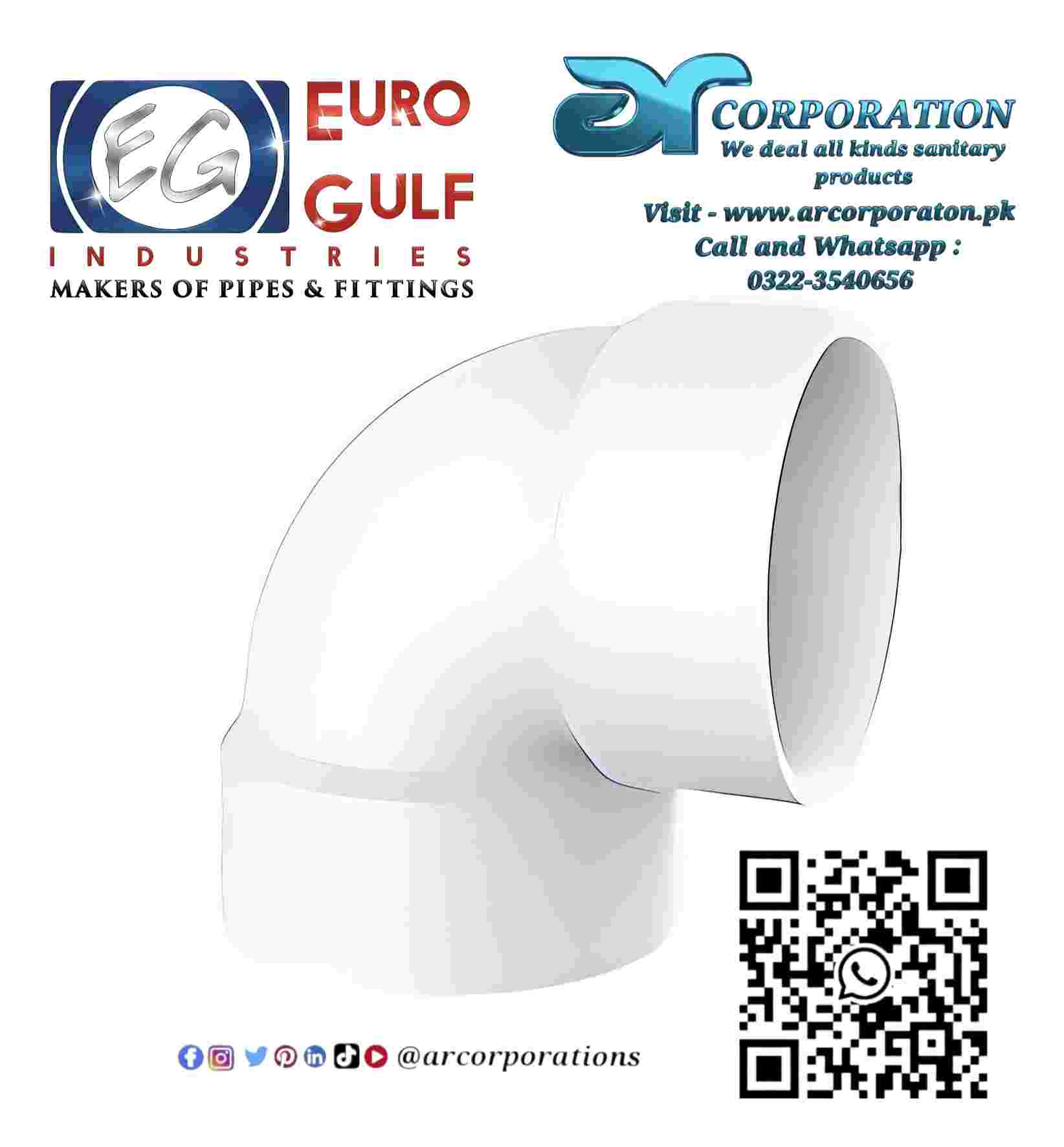
upvc Elbow 4″
Euro Gulf local Distributor Suppliers in Karachi Contact 0321-2248975 ASTM uPvc Sch-40 Pressure Fittings, Drain sewer ventilation
What is Euro Gulf upvc Elbow 4″ ?
The Euro Gulf UPVC Elbow 4″ Sch 40 is a high-quality plumbing fitting designed to change the direction of flow in a piping system by 90 degrees. It is specifically engineered for use in HVAC (Heating, Ventilation, and Air Conditioning) systems, as well as hot and cold water supply lines. The “Sch 40” designation indicates a standardized wall thickness, making it suitable for medium-pressure applications.
Description & Material
- Material: Unplasticized Polyvinyl Chloride (UPVC), also known as PVC-U. This is a rigid, durable, and chemically resistant material.
- Color: Typically white or dark grey (color may vary by manufacturer).
- Connection Type: Socket (Socket Weld/ solvent cement weld). This is the most common method for joining UPVC pipes and fittings, creating a strong, leak-proof bond.
- Shape: Elbow 90-degree. This fitting is used to route pipes around obstacles or to change direction from vertical to horizontal or vice-versa.
- Brand: Euro Gulf (a known manufacturer of UPVC piping systems).
Key Specifications
- Size: 4 Inches (Nominal Pipe Size – NPS). This fits over a standard 4″ Sch 40 UPVC pipe (actual outer diameter approx. 4.500 inches).
- Schedule: 40 (Sch 40). This defines the wall thickness (0.237 inches for 4″ pipe) and pressure-carrying capacity.
- Pressure Rating: Typically 280 PSI (19 Bar) at 73°F (23°C). The pressure rating decreases as the temperature of the fluid increases. For hot water (e.g., 140°F/60°C), the rating is lower (consult specific charts).
- Temperature Range: -20°C to 60°C (-4°F to 140°F) for water and HVAC fluids. Not suitable for steam or high-temperature applications exceeding its rating.
- Standards: Conforms to ASTM D2467 (Schedule 40 Socket-Type Polyvinyl Chloride (PVC) Plastic Pipe Fittings, Type) and ASTM D1784 (Polyvinyl Chloride (PVC) Compounds).
Benefits for HVAC and Water Supply
- Corrosion Resistance: UPVC does not rust, scale, or corrode, ensuring long-term flow efficiency and quality of water/transported fluid.
- Chemical Resistance: Excellent resistance to many chemicals, making it ideal for chilled water, condenser water, and treated boiler feed water lines.
- Smooth Interior: Provides excellent flow characteristics with minimal friction loss, reducing pumping costs.
- Leak-Proof: Solvent cement joints, when properly made, create a monolithic, leak-proof system.
- Cost-Effective: Lower material and installation costs compared to metal (copper, steel) systems.
- Low Thermal Conductivity: Does not sweat as readily as metal pipes, which is beneficial for chilled water lines to prevent condensation.
Installation Procedure
Tools Required: Pipe cutter or saw, deburring tool/chisel, solvent cement (specifically for UPVC/PVC), primer (optional but recommended), clean rags, safety glasses.
Steps:
- Measurement & Cutting: Measure and cut the 4″ UPVC pipe to the required length, ensuring a square cut.
- Deburring & Beveling: Use a deburring tool to remove sharp edges and create a slight bevel (15°) on the outside of the pipe. This aids in insertion.
- Cleaning: Wipe the pipe end and the fitting socket interior with a clean rag to remove dirt, moisture, and debris.
- Dry Fit (Trial Assembly): Dry-fit the pipe into the elbow to ensure it goes in about 1/3 to 2/3 of the socket depth.
- Application of Solvent Cement:
- Apply a medium-bodied UPVC solvent cement liberally to the pipe end (outside) and the fitting socket (inside). Use a natural bristle brush (size 3/4″ to 1″).
- Apply a second coat to the pipe.
- Assembly: Immediately after applying cement, insert the pipe into the elbow with a 1/4 turn to evenly distribute the cement. Align the fitting properly.
- Hold: Hold the joint firmly for about 30 seconds to prevent the pipe from being pushed out.
- Curing: Allow the joint to cure. Critical: Cure time depends on temperature and humidity. At 60-100°F (15-38°C), allow at least 2 hours before handling and 24 hours before pressure testing. Follow the cement manufacturer’s instructions.
Usage & Applications
- HVAC Systems: Primary use in Chilled Water Systems, Condenser Water Lines, and some Heating Water Systems (within temperature limits).
- Potable Water Supply: Ideal for both hot and cold water distribution in residential, commercial, and industrial buildings.
- Industrial Process Piping: For transporting various chemicals and fluids where compatible.
- Irrigation: Common in agricultural and landscape systems.
Important Notes & Limitations
- Not for Steam: Do NOT use for steam lines or steam heating systems.
- Not for Portable Water in all regions: Always check local codes (e.g., UPC, IPC) for approval for potable water use.
- UV Exposure: Prolonged direct sunlight exposure can cause UV degradation. Use UV-resistant paint or protect with insulation if installed outdoors.
- Insulation: For chilled water lines, insulation is mandatory to prevent condensation and energy loss.

Reviews
There are no reviews yet.