
Description
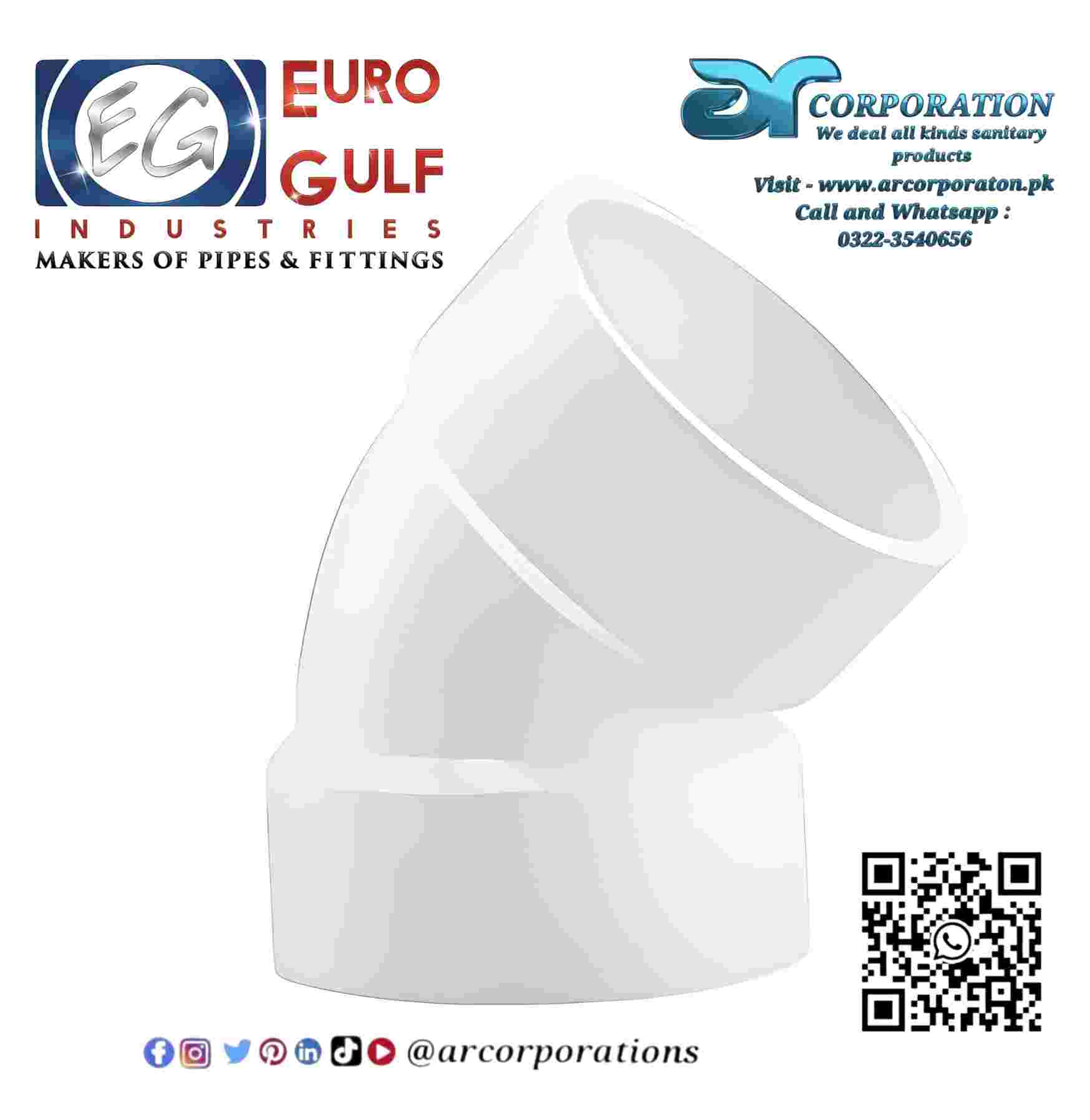
upvc Elbow 6″ 45*
Euro Gulf local Manufacturer Suppliers in Karachi Contact 0321-2248975 ASTM uPvc Sch-40 Pressure Fittings, Drain sewer ventilation
What is Euro Gulf upvc Elbow 6″ 45* ?
A 6-inch, 45° uPVC elbow Schedule 40 is a pipe fitting that changes the direction of flow between two pipes by 45 degrees. It is made from rigid un plasticized polyvinyl chloride (uPVC) — a durable plastic commonly used in water systems.
Key basics:
-
📏 Size: 6″ nominal diameter
-
🔁 Angle: 45° turn
-
🧱 Schedule: SCH 40 (standard wall thickness, pressure-rated)
-
🔗 Connection: Socket ends for solvent/solvent-cement joining
-
🎨 Material: uPVC (white or grey)
-
⚖️ Material class: Un plasticized PVC — rigid and strong
-
🔥 Max temp: ~60 °C (140 °F) (typical for SCH 40 uPVC)
📊 Material & Specs
Material:
-
uPVC (Un plasticized Polyvinyl Chloride):
-
Rigid thermoplastic with high strength
-
Excellent corrosion and chemical resistance
-
Low weight and smooth internal surface → efficient flow
-
Non-toxic for potable water systems
-
Standard & Pressure:
-
Sold as Schedule 40 fitting — meaning predictable wall thickness and performance for moderate pressure water systems.
-
Many SCH 40 PVC systems follow ASTM D2466 / ASTM D1785 standards in manufacturing and dimensions.
-
Typical service conditions include cold and warm water under pressure; uPVC systems are not designed for sustained high temperatures above ~60 °C.
🏗️ Applications Euro Gulf upvc Elbow 6″ 45*
This elbow fitting is used where you need a direction change in a piping network — most commonly:
💧 Water Supply Systems
-
Cold potable water distribution
-
Warm domestic water where temperature stays within uPVC limits
-
Service and feed lines in buildings
❄️ HVAC (Heating, Ventilation & Air Conditioning)
-
Drain lines, condensate lines in HVAC units
-
Non-pressurized water distribution loops
-
Cooling water return paths (not primary high-temperature boiler loops)
🧑🔧 General Plumbing & Industrial
-
General plumbing redirection points
-
Irrigation systems & outdoor networks
-
Drainage or waste lines when combined with other PVC fittings
What it’s not ideal for:
-
Very hot water systems over ~60 °C
-
High-pressure boiler water loops or steam
-
Main HVAC hot water distribution without alternative material like CPVC
🔧 Installation Guide (Typical for SCH 40 uPVC)
-
Prepare Pipes:
-
Cut pipe ends squarely, deburr, and clean both pipe and elbow sockets.
-
-
Dry Fit:
-
Test-fit pipe into elbows to check proper alignment and depth.
-
-
Apply Solvent Cement:
-
Apply an appropriate uPVC solvent cement inside the elbow socket and around the pipe end.
-
-
Assemble:
-
Insert pipe fully into fitting with a slight twist; hold for a few seconds to tack.
-
-
Cure Time:
-
Allow recommended cure time per cement instructions before pressurizing.
-
-
Testing:
-
Once cured, test with water at low pressure to check for leaks before full operation.
— This standard solvent-weld system forms a permanent, leak-resistant joint.
-
✅ Advantages
-
Corrosion & Chemical Resistance: Doesn’t rust, scale, or corrode in typical water environments.
-
Lightweight & Durable: Easier to handle and install than metal alternatives.
-
Smooth Interior: Reduces friction loss; less buildup and clogging.
-
Non-toxic: Safe for potable water when installed correctly.
-
Cost-Effective: Cheaper than metal fittings and offers long service life.
⚠️ Limitations & Considerations
👉 Temperature:
uPVC has temperature limits. For hot water supply approaching or exceeding ~60 °C, CPVC or other high-temperature materials are recommended.
👉 UV Exposure:
Direct sunlight can degrade uPVC over long periods unless UV-stabilized.
👉 Pressure Rating:
Pressure rating decreases as temperature rises; verify with manufacturer’s datasheet if operating near design limits.
📌 Usage Tips
-
Always match pipe and fitting Schedule (SCH 40) for proper joint compatibility.
-
Use proper solvent cement and primer for secure solvent welding.
-
Ensure piping layout accounts for expansion/contraction with temperature changes.
-
For HVAC hot water loops, confirm allowable temperatures before final selection.

Reviews
There are no reviews yet.