
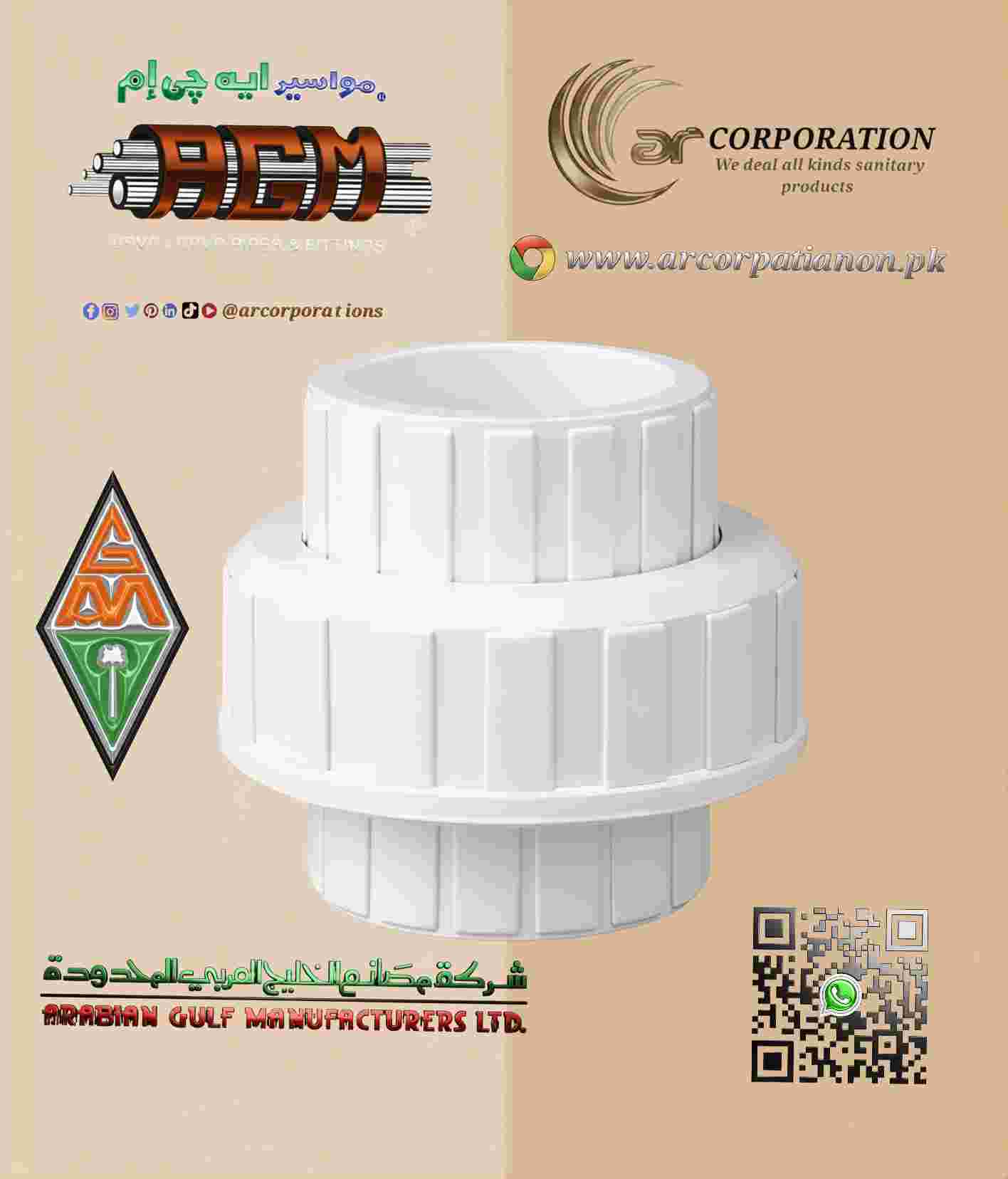
Description
PVC Union 1-1/4″
AGM imported from Saudi Arab ASTM uPvc Sch-40 Pressure Fittings, Drain sewer ventilation. importer distributor contact 0322-3540656
What is AGM upvc Union 1-1/4″ ?
AGM uPVC Union — 1-1/4″ Schedule-40 (imported from Saudi Arabia): what it is, typical specifications, how it’s installed, and how/where it’s used. I pulled AGM product/catalog pages and authoritative PVC fitting sources so the technical bits match industry practice.
description
An AGM uPVC (PVC-U) Schedule-40 union, 1-1/4″ nominal is a three-piece socket union fitting made of rigid (un plasticized) PVC. It’s intended for pressure plumbing systems where a removable joint is needed (so parts can be disconnected for maintenance). The AGM listings identify these as ASTM/ Schedule-40 pressure fittings imported from Saudi Arabia and sold for water, drainage and sewerage applications.
specifications
-
Manufacturer / Brand: AGM (AGM Piping Systems) — Saudi Arabia (imported).
-
Type: Socket x socket union (3-piece union with nut + two sockets + internal O-ring).
-
Nominal size: 1-1/4″ (IPS nominal).
-
Material: UPVC / PVC-U (molded PVC) — white. (Some listings for similar AGM items mix CPVC text — for standard SCH-40 unions you should expect PVC-U; verify the exact AGM SKU label if you need CPVC instead.)
-
Standards: Manufactured to common PVC fitting standards (ASTM D2466 / ASTM D1785 compatibility with Schedule-40 pipe). AGM catalogs reference ASTM schedules and dimensions.
-
Maximum operating temp: Typical Schedule-40 PVC fittings are rated around 60°C (140°F) maximum for continuous service (common manufacturers list ~60°C / 140°F). Do not use for sustained hot water above rated temp.
-
Pressure rating: Pressure capacity varies with temperature and wall thickness; Schedule-40 PVC has published pressure tables (manufacturer catalog gives working pressures at 23°C with a safety factor). Check the AGM catalogue or the specific part number for the exact pressure rating for 1¼” unions. (AGM catalogs list pressure ratings by size.)
-
Seal: Buna-N (Nitrile) or similar O-ring is typical inside the union nut to make the watertight seal.
Applications
-
Potable water (when the fitting and O-ring are NSF/approved — verify local product certification).
-
Cold water pressure systems, irrigation, pools, chilled water.
-
Drainage, sewer vent connections where a removable joint is useful.
-
Mechanical systems where periodic disassembly is needed (e.g., pumps, filters).
Do not use for continuous high-temperature hot water beyond the PVC rating or for aggressive chemical services unless manufacturer chemical compatibility confirms suitability.
Installation
Important: follow the AGM part instructions if supplied; below is a standard, safe procedure for Schedule-40 socket unions.
-
Prepare pipes: Cut pipe square, remove burrs, chamfer and dry-fit to confirm proper depth. Measure and mark insertion depth.
-
Clean & solvent-weld socket ends (if fittings are solvent-weld type): For socket x socket unions you typically solvent-weld the union sockets to the pipe ends using an appropriate PVC primer and solvent cement conforming to the same ASTM standard. Apply primer (if required locally), then apply solvent cement to pipe and socket and push fully home with a quarter-turn, hold briefly. Follow cement manufacturer cure time before pressurizing. (If the union is supplied as a mechanical union with threaded ends, follow threaded joint instructions instead.)
-
Check the O-ring: Place the O-ring in its groove; if required, lubricate lightly with a manufacturer-approved lubricant (silicone grease compatible with Buna-N) so the rubber seats correctly and does not nick. Do not use petroleum oils.
-
Assemble union: Bring the two socketed halves together with the O-ring in place, engage the union nut and hand-tighten until snug. Many manufacturers recommend hand tightening and then a small additional wrench turn — do not over-torque (over-tightening can deform the plastic or O-ring). Follow AGM torque/assembly guidance if provided.
-
Cure & test: Allow solvent cement to cure per cement maker instructions before pressure testing. Perform a hydrostatic leak test at recommended test pressures and check for leaks at the union.
Maintenance & common notes
-
Unions allow easy disassembly for maintenance — when reassembling ensure O-ring is intact and clean. Replace O-ring if hardened or damaged.
-
Store fittings away from direct sunlight and high heat to reduce UV embrittlement.
-
Confirm chemical compatibility for any aggressive fluids; PVC is not suitable for some solvents and high-strength acids/bases.
-
For buried or exterior pressure lines, follow local codes regarding burial depth, bedding, and protection; unions are generally used aboveground or inside accessible enclosures because they add a removable joint.
What to confirm when you buy (quick checklist)
-
Exact AGM part number / SKU (AGM catalogs list part numbers by size).
-
Material label: UPVC vs CPVC (some product pages mix CPVC wording — verify you are getting PVC-U for cold water/sewer use or CPVC for higher temp applications).
-
Standards & approvals you require (ASTM D2466, NSF, local authority approvals).
-
O-ring material (Buna-N typical) and spare O-rings availability.

Reviews
There are no reviews yet.